
How Christmas is Celebrated in Cameroon

Experiencing Christmas in Cameroon quickly reveals: this celebration feels different from Europe – yet it’s about the same things: community, hope, and gratitude.
Around 70% of Cameroonians are Christians. In the days leading up to Christmas – which falls in summer there – cities like Douala or Yaoundé are loud and bustling. Markets overflow, buses and taxis jam the streets, and everywhere people buy new clothes. On the evening of December 24, many churches fill up. Depending on denomination, Christmas Mass may also take place early on Christmas morning, often between 5 and 7 a.m. Services are lively, with singing, drums, and dancing. People wear their finest clothes – not out of vanity, but as a sign of dignity and thankfulness.
During the holidays, families gather to cook and spend time together. A classic festive dish is Ndolé, whose main ingredient is the leafy vegetable of the same name, also known as bitterleaf or bitter spinach. The dish is enriched with peanuts and meat or fish and traditionally served with plantains.
Back to the Roots
In southern Cameroon, Christmas is closely tied to rural life around the two major cities. Many families living in urban areas originally come from villages in surrounding regions. Those who can afford it travel back home for the holidays. Those who stay send money, food, or clothes to their villages. Christmas is a time for sharing – even across distances.
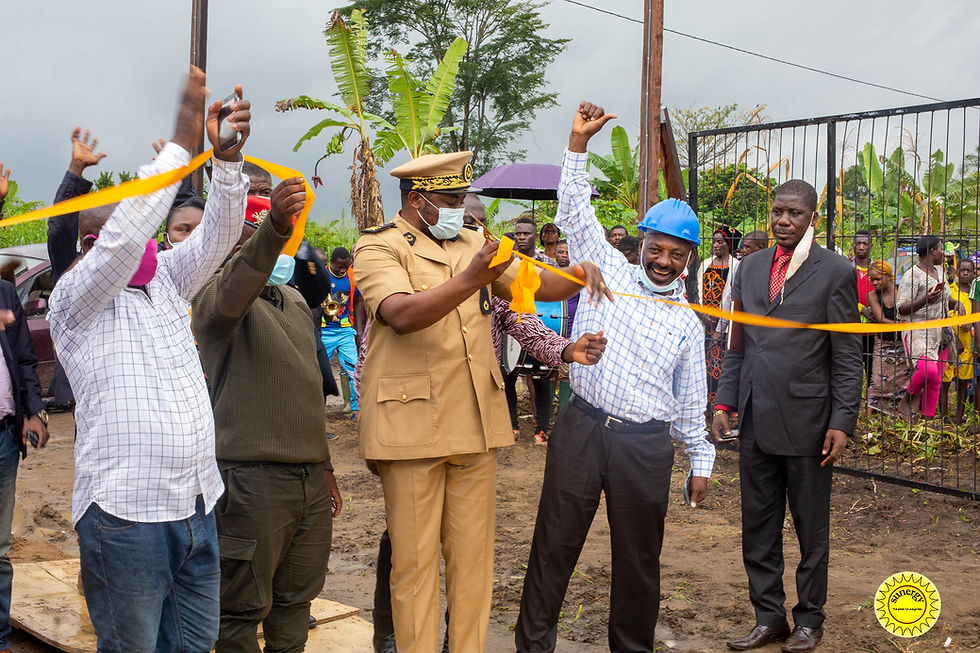
In villages, celebrations are simpler but no less meaningful. This is true in places like Kotto Up, Kotto Mission, Kotto Nachtigall, and Matouke, where we are currently working on solar electrification. Strings of lights, a staple of European Christmas, would certainly appeal to African tastes – but electricity is often lacking. Reportedly, about 10,000 villages in Cameroon still live without power.
Church and Family at the Center
The church is the focal point, sometimes the only decorated building. Singing is loud and long, often in local languages. After the service, people gather and share what they have: chicken, plantains, rice, or a traditional dish. Not every family can afford a feast, but no one should be left alone.
Children are happy with new clothes or a special meal – gifts in the European sense are rare. What matters most is the feeling of belonging. In many villages, Christmas is one of the few times of the year when families come together completely.
Between city and village, the essence of Christmas in Cameroon becomes clear: connection. The bustling cities and the simplicity of rural life belong together. Christmas is the time when this connection is most tangible – in faith, in sharing, and in togetherness.
If you’d like to see how electrification is changing life in rural Cameroon, we recommend the 30-minute documentary ‘A New Era’ by filmmaker Agbor Obed Agbor, produced three years ago about the work of our subsidiary SunErgy.

Comments